SAP® Build Code = SAP® BAS + Joule AI Chat to build App Boiler Plate + Storyboard + Page Map + Graphical No-Code Low-Code Development Features
In the rapidly evolving landscape of enterprise application development, SAP® has introduced a game-changing combination: SAP® Business Application Studio (BAS) powered by Joule AI. This powerful integration is fundamentally transforming how developers and business users create, customize, and deploy applications on the SAP® Business Technology Platform (BTP).
The Evolution of SAP® Development
Traditional vs. AI-Powered Development
The shift from traditional development methods to AI-assisted creation represents a paradigm shift in how we approach application building:
The Old Way:
Required significant technical knowledge to create, extend, and debug applications
Relied on wizard-based navigation for boilerplate generation
Demanded deep understanding of SAP® architectures and coding patterns
Time-consuming setup and configuration processes
The New Way with Joule:
Minimal to no technical knowledge required for app creation and extension
Chat-like interface for AI-powered generation
Intelligent boilerplate creation with full-stack capabilities
Streamlined, intuitive development experience
Understanding the SAP® Build Suite Ecosystem
SAP® BAS with Joule operates within the broader SAP® Build Suite, creating a comprehensive development ecosystem on SAP® BTP:
SAP® Build Suite Components Includes
SAP® Build Apps – Low-code UI development platform
SAP® Build Process Automation – Workflow creation and RPA capabilities
SAP® Build Work Zone – Unified launchpad experience
SAP® Business Application Studio (BAS) – The core development environment enhanced with AI which is called now SAP® Build Code
How It All Works Together
The architecture creates a seamless flow:
AI Generation: Joule generates full-stack boilerplate applications within BAS
Backend Services: Create and manage backend services efficiently
Service Consumption: Connect UI applications to backend services
Deployment: Deploy applications directly to SAP® BTP
Integration: Applications can be consumed through Work Zone
Automation: Workflows enhanced with AI add-ons through Process Automation
Getting Started: Three Practical Steps
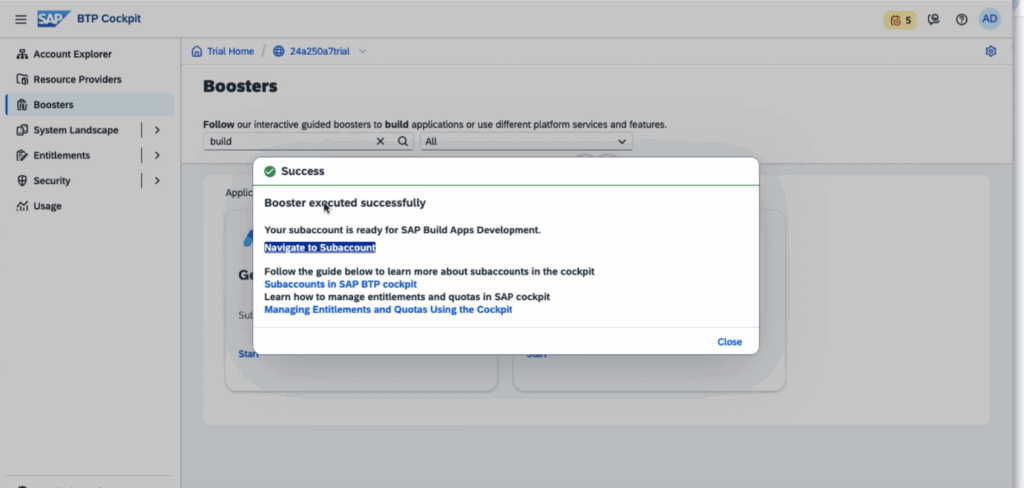
Step 1: Setup with Booster
The journey begins with proper environment setup using SAP® BTP Booster. This automated configuration tool prepares your SAP® BTP environment with all necessary Services, Roles, Auth and Entitlements setup, eliminating the complexity traditionally associated with platform setup.
Step 2: Create Your New Project
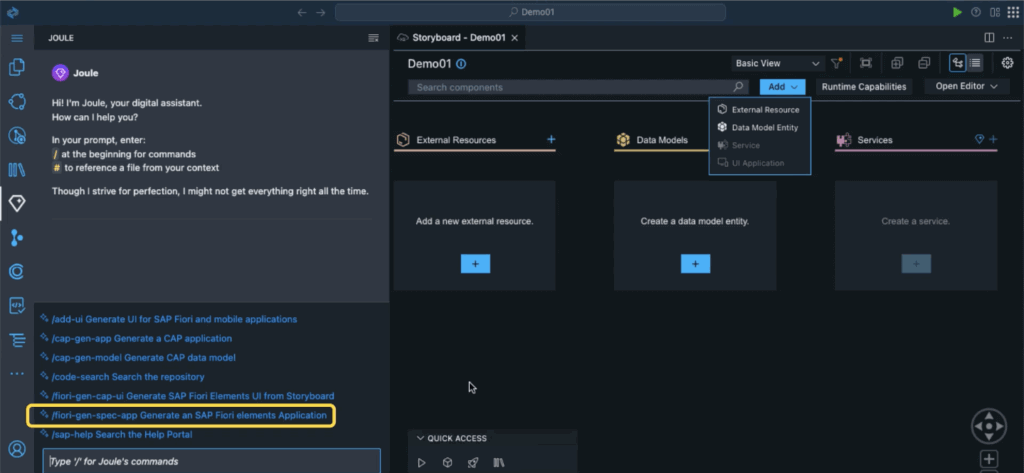
This is where Joule’s AI capabilities truly shine. Instead of navigating through complex wizards or writing boilerplate code from scratch, you can:
Describe your application requirements in natural language
Let Joule generate the full application structure
Receive intelligent suggestions for data models, UI patterns, and service integrations
Start with production-ready code that follows SAP® best practices
Step 3: Customization with Storyboard, Page Map and Graphical Modeller
The Storyboard, Page Map and Graphical Modeller feature allows you to:
Visualize your application architecture
Make customizations through the UI and no-code or low-code exposure
Extend functionality without deep technical knowledge
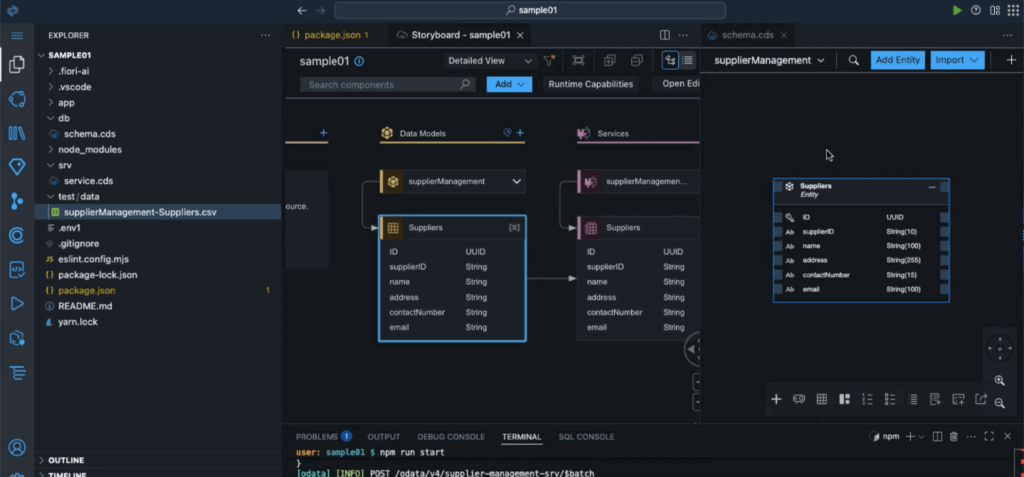
Storyboard (as shown in above image) will be first screen which will appear after your app is created via Joule AI, it will provide you an overview of the application. You can navigate further to Page Map which shows how different UI screens are linked. There are various graphical tools, such as the graphical schema tool and UI Annotation tool etc. to change Schema and UI respectively without Coding.
Why This Matters: The Business Impact
Low Code Development:
By reducing the technical barrier to entry, SAP® BAS with Joule enables:
Citizen developers to create meaningful applications
Business analysts to prototype solutions quickly
Professional developers to focus on complex business logic rather than boilerplate code
Organizations to accelerate their digital transformation initiatives
Accelerating Time-to-Value
The AI-powered approach dramatically reduces:
Initial setup time from days to hours
Development cycles from weeks to days
Learning curves for new team members
Maintenance overhead through standardized, well-structured code
Enhancing Quality and Consistency
Joule’s AI generation ensures:
Adherence to SAP® best practices
Consistent code patterns across projects
Built-in security and performance optimizations
Reduced technical debt from the outset
The Path Forward
The integration of AI through Joule into SAP® BAS represents more than just a feature upgrade—it’s a fundamental reimagining of how enterprise applications are created. By combining the power of conversational AI with the robustness of SAP®’s development platform, organizations can:
Bridge the skills gap in SAP® development
Innovate faster with rapid prototyping and iteration
Scale development capacity without proportionally scaling team size
Maintain quality while increasing development velocity
Summary: A New Era of SAP® Development
The journey with SAP® BAS and Joule follows a clear path:
Setup: Quick environment preparation with automated boosters
Getting Started: Hands-on development with AI assistance
Wrap Up: Production-ready applications with minimal or no development
As organizations continue to demand faster digital transformation and more agile development processes, tools like SAP® BAS with Joule aren’t just nice to have—they’re becoming essential. The combination of low-code/no-code capabilities, AI-powered generation, and professional development tools creates a platform that can serve everyone from business users to expert developers.
The future of SAP® development is here, and it’s more accessible, faster, and more intelligent than ever before.
In this blog, we will Summarise our Development Experience with SAP® BAS(Business Application Studio). You can also watch the detailed course of Learn SAP® Business Application Studio(BAS) Developmenthere with Hands-on Examples and In-Depth Topic Coverage.
1. What is SAP® BAS?
SAP® Business Application Studio also known as SAP® BAS, is a Service in SAP® Cloud for Integrated Development and Enhancement of Applications.
2. What SAP® BAS is made of?
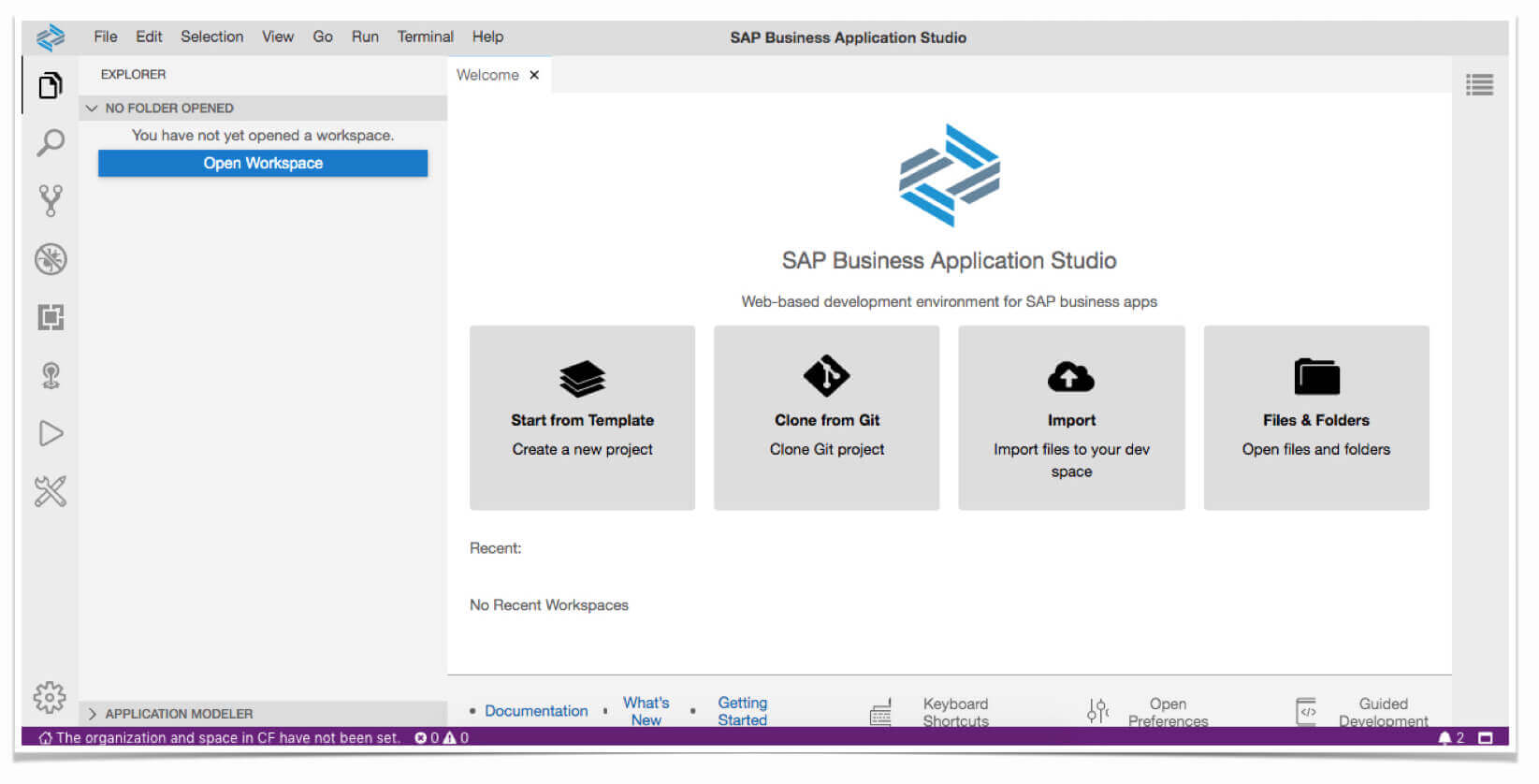
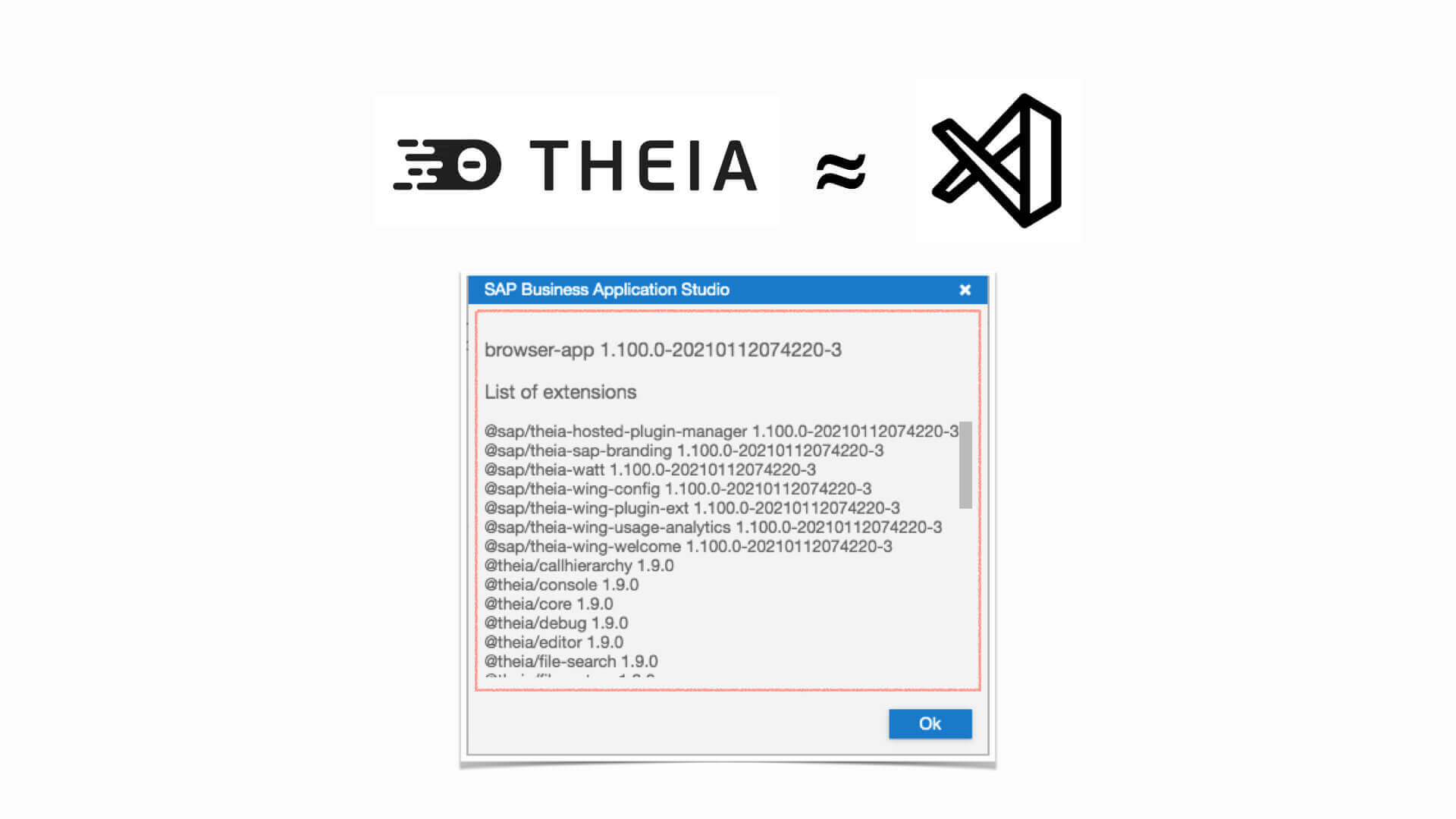
SAP® BAS is a container that is Based out on Eclipse Theia which almost looks Like a VS Code Development Environment.
3. Is it Free to Use?
No, for productively using SAP® BAS you need to acquire SAP® Licence.
4. How Many kinds of SAP® BAS is Present?
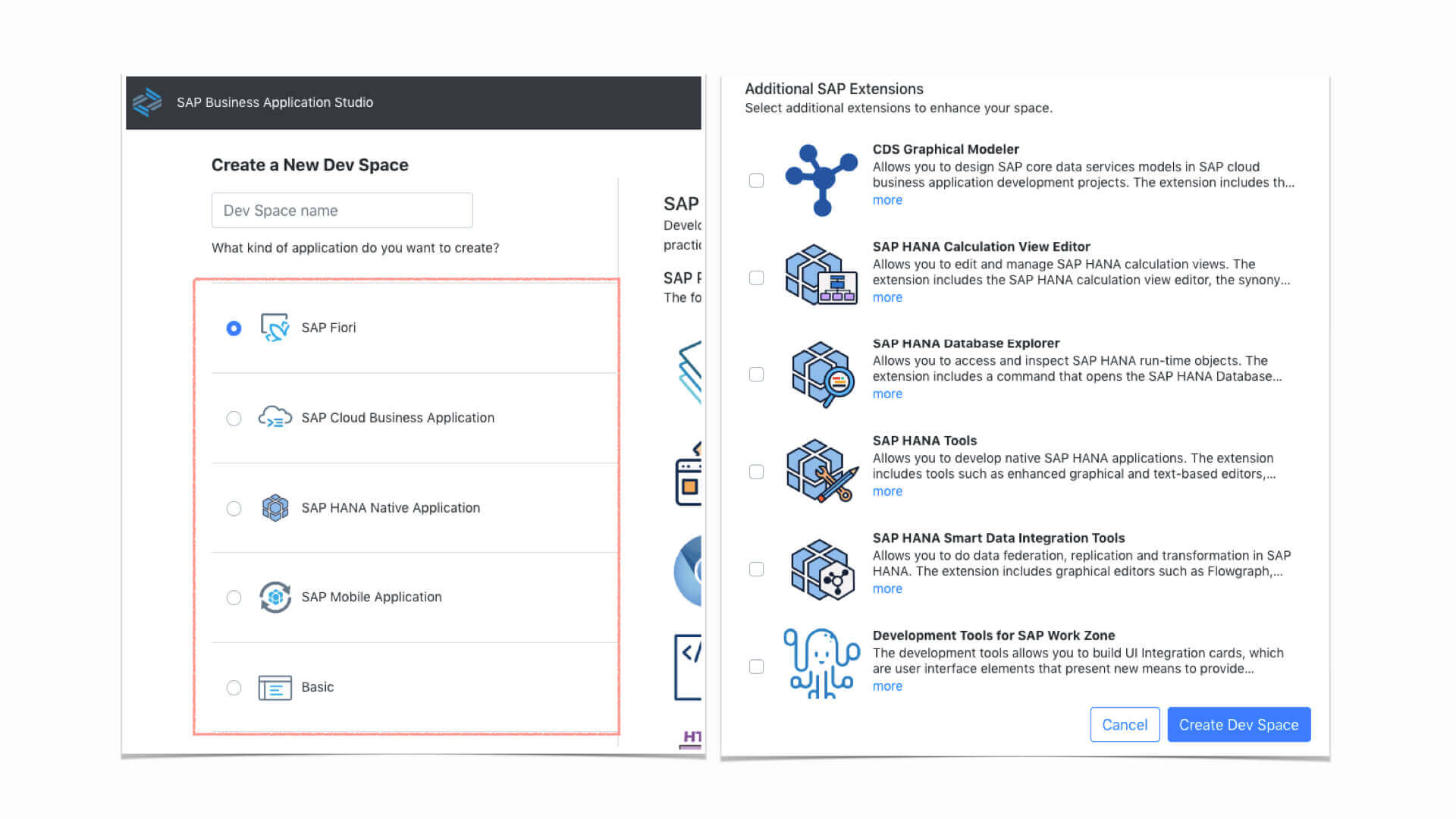
SAP® BAS has different Flavours that are tailored for different types of development. For developing SAPUI5 or Fiori® App with BAS you select SAP® Fiori type, for developing CAPM App you select SAP® CAPM® type and so on. Also, with time you might see more development Flavour added to it.
You can also enable different packages like SAP® Workflow Package, CDS Viewer, HANA® Development Packages Which will allow you to develop the respective type of Project and Operate on Different File Types.
In our course of Learn SAP® Business Application Studio(BAS) Development here, we have covered details with SAP® Fiori®, SAP® CAPM and SAP® Workflow Dev Space Kind. In SAP® Fiori® Dev Space we have covered the new Standards and Format of SAPUI5 App Development in Details with Approuter, xs-app.json, SAPUI5 Tooling, Regular Expression, Connection Settings, Run Configuration, MTA.YAML and more.
5. What is the Operating System on Which SAP® BAS Runs?
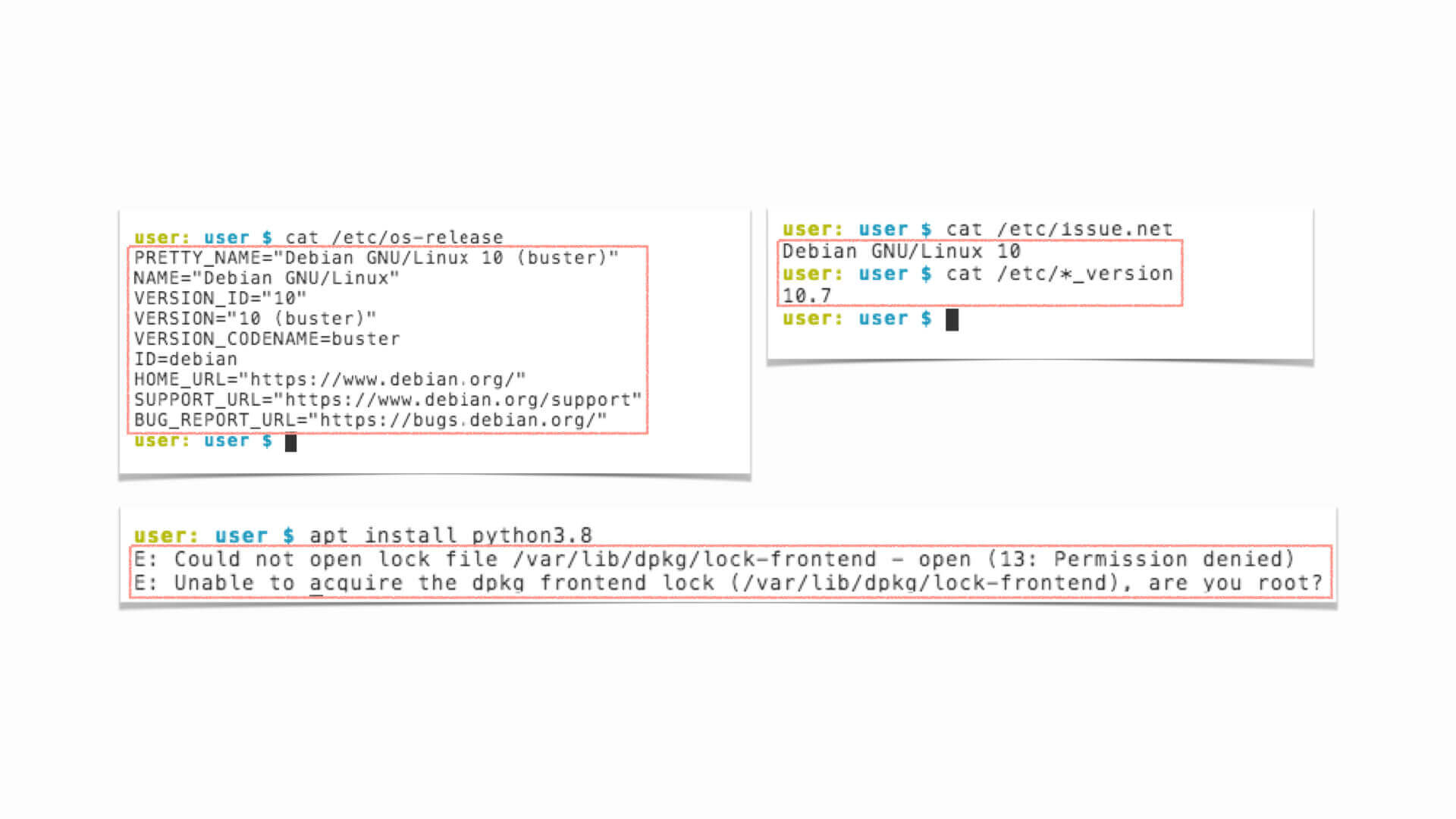
SAP® BAS is a Virtual Container that runs on Ubuntu Based OS Architecture.
Developers will not have root access to the operating system but still, the additional packages and modules required for the project can be installed with the Terminal.
6. How good is Terminal experience in BAS?
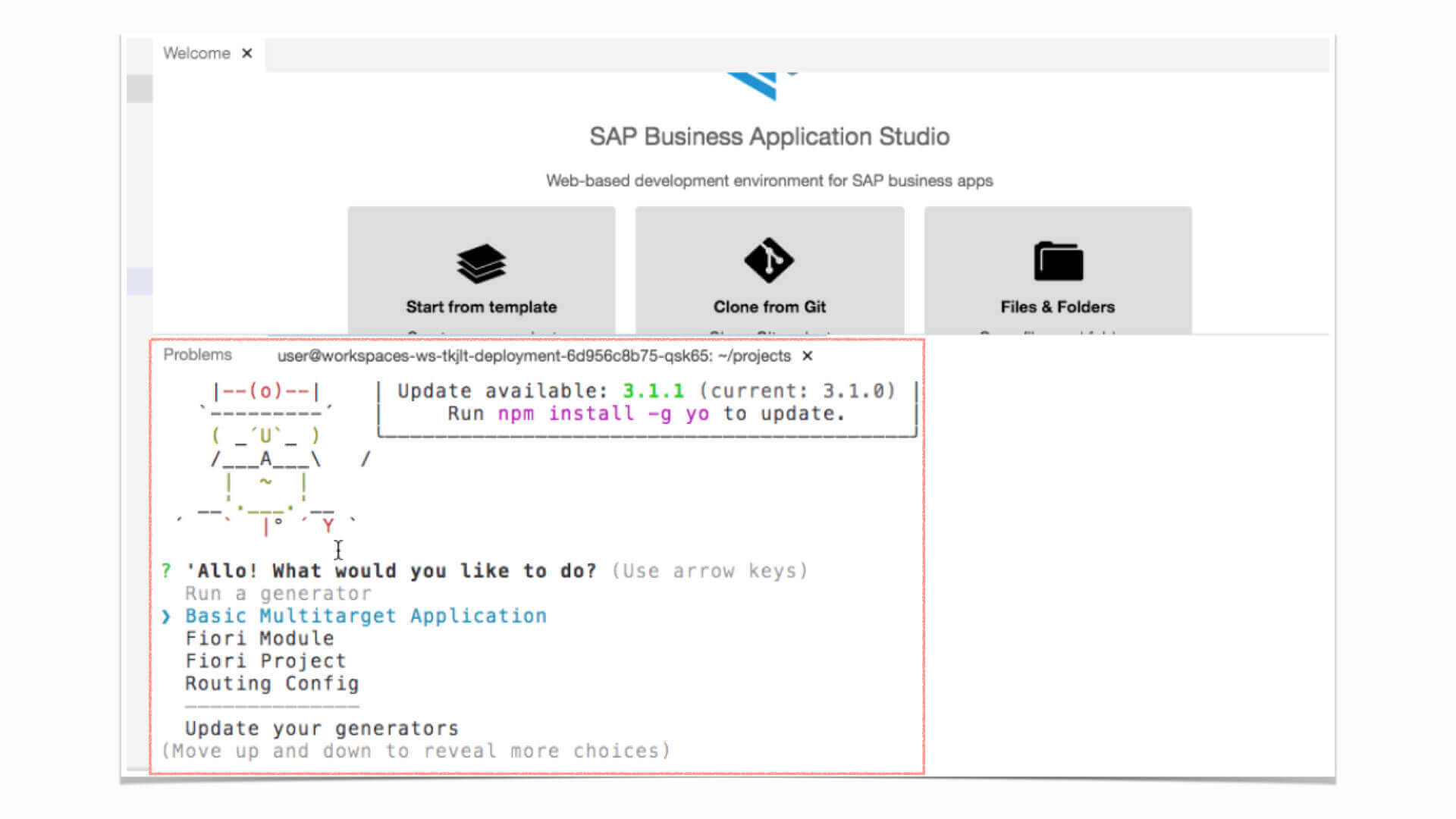
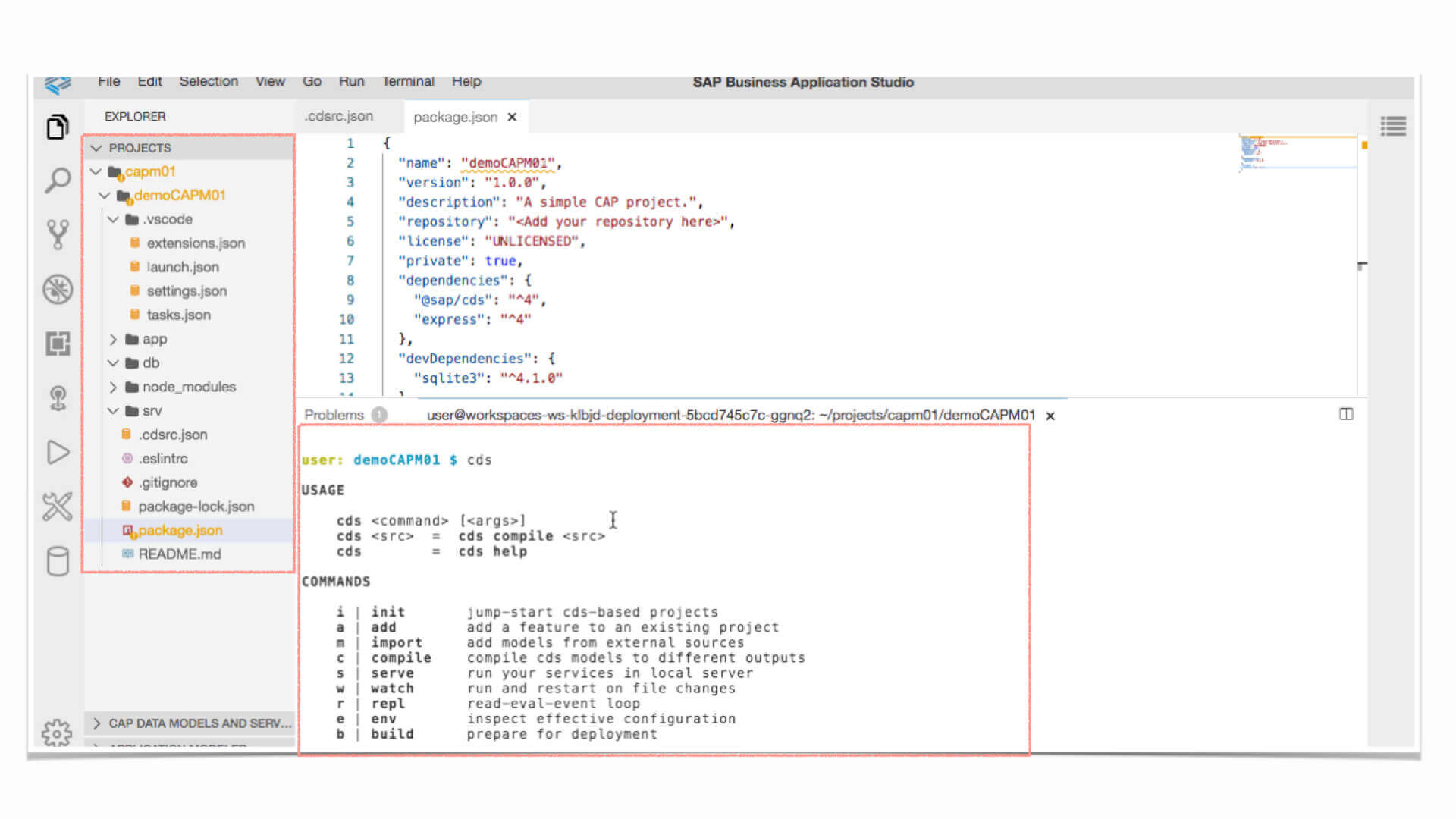
SAP® BAS Terminal Provides an Integrated Experience of Development and Dev-Ops. You can switch back and forth between, editors, terminal, and explorer to get the development done fast. You can almost use all CLI(Command Line Interface) Command with SAP® BAS which you might be using with Linux Systems. But for commands which require any kind of Extra Permissions like root permissions will not be possible out of the box.
Terminal also allows you to do an operation in multiple ways.
Example 1. If you want to push an App to SAP® Cloud Foundry you can either use Explorer, right-click on MTA File, and Right Click on the Build and Deploy or You can also use BAS Terminal directly to use the respective CLI Commands.
In our course of Learn SAP® Business Application Studio(BAS) Development here, we have covered details of the MTA File Structure, also how to customize it for the Deployment to SAP® Cloud Foundry and On-Premise ABAP® Systems in Details, so make sure to check it out.
Example 2. You can use Yeoman Generator from CLI and create a Blank Application or Also you can use File>New Project from Template option to create a new Project.
One of the big advantage with BAS Terminal is it will allow you to use your existing knowledge about CLI Commands and get you out of difficult situations, for example chaining Terminal commands of npm install && npm build && cf push will allow you to chain 3 multiple commands together and you can take a coffee or tea break( depending upon your preference 😀 ) in between and not have to wait in front of the screen.
When you are developing a NodeJS Based Application you can quickly test a piece of Javascript code by just typing Node jsbasecode.js to see how it performs.
These are just the tip of the iceberg, over time with the usage of BAS you will want to use more Terminal, than the Menu Options Provided because most of the operations are fast with Terminals.
Additionally, you also get a Find Command Option which has a list of popular CLI commands and CLI Operations one can use, which makes it even more fun to use Terminal Based Commands
Also, our course of SAP® BAS here covers how you can chain multiple commands together, create a project, build the project, run it or deploy it using CLI.
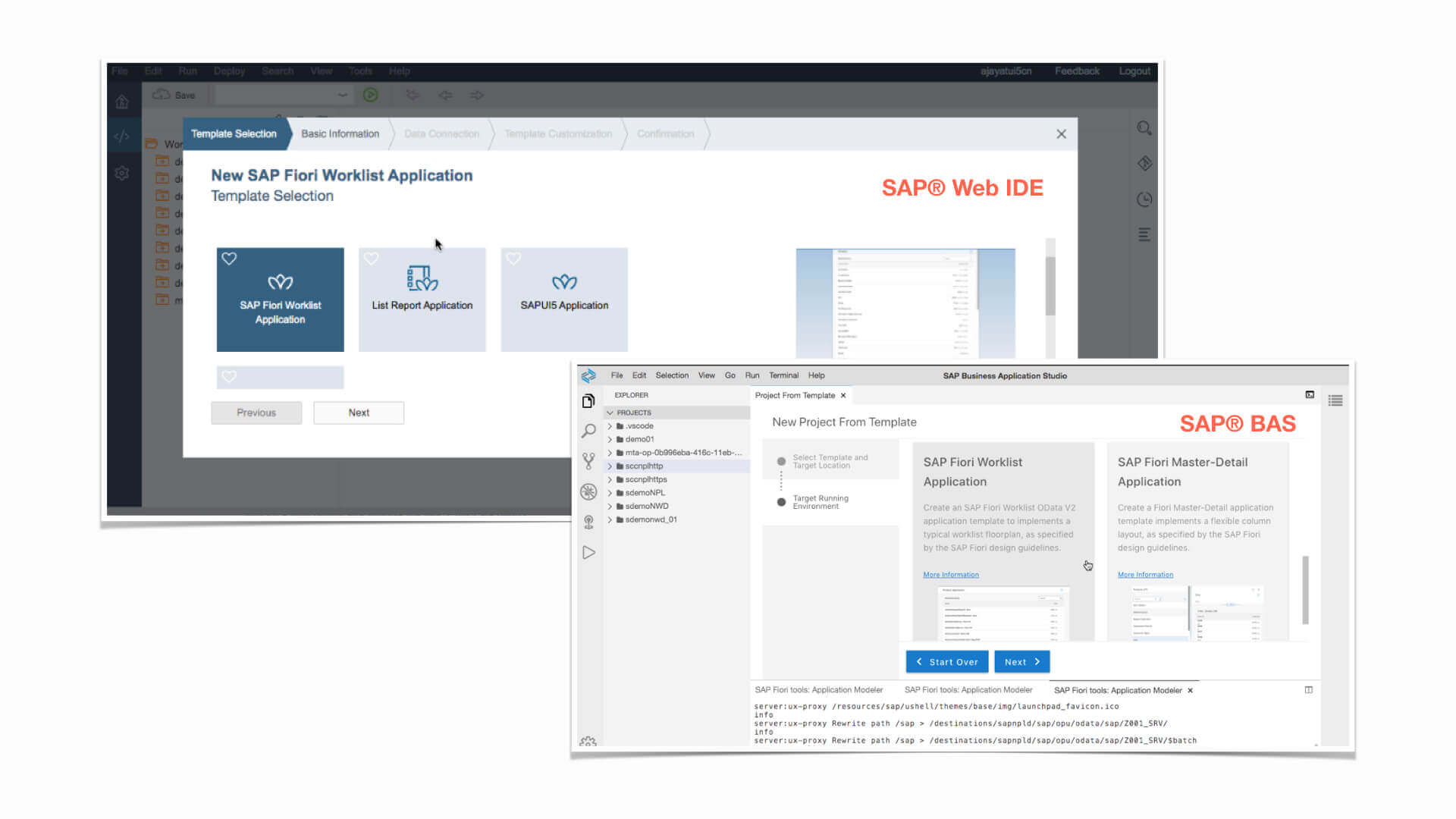
7. What is new in SAP® BAS compare to SAP® Web IDE?
SAP® Full Stack Web IDE was removed from SAP® Cloud offering on 13th Nov 2020. SAP® Web IDE Personal Edition is still under downloads but it is not getting any more updates, the link can be reached from here https://tools.hana.ondemand.com/#sapui5
In our course of Learn SAP® Business Application Studio(BAS) Development here, we have shown how one can start from exiting the SAPUI5 project of SAP® Web IDE Personal Edition and Import it into SAP® BAS. Once you import the existing Project to SAP® BAS, we have also covered in a step-by-step manner how to change the structure to New Standard SAPUI5 App Structure, Customization of Approuter and YAML file.
Now, when we see the need to update from existing SAP® Web IDE to SAP® BAS, the main reason can be:
SAP® BAS Pros Compare to SAP® Web IDE
[Note: Below are personal opinions with our limited experience with Free Trial]
BAS have different flavors, so for example one who wants to only work with CAPM can select that kind of environment with BAS. This needs to be done at the beginning of the BAS setup.
In BAS the Underlying Eclipse Theia is designed to provide developers VS Code like development, experience which is one of the most popular developments IDE used. So you can use your existing knowledge of VS Code and Switch to BAS interface easily.
BAS provides powerful CLI Functionalities and even if you are new to Terminal you can still use the List Terminal Command Options and select from the List your Command Without remembering equivalent CLI Command.
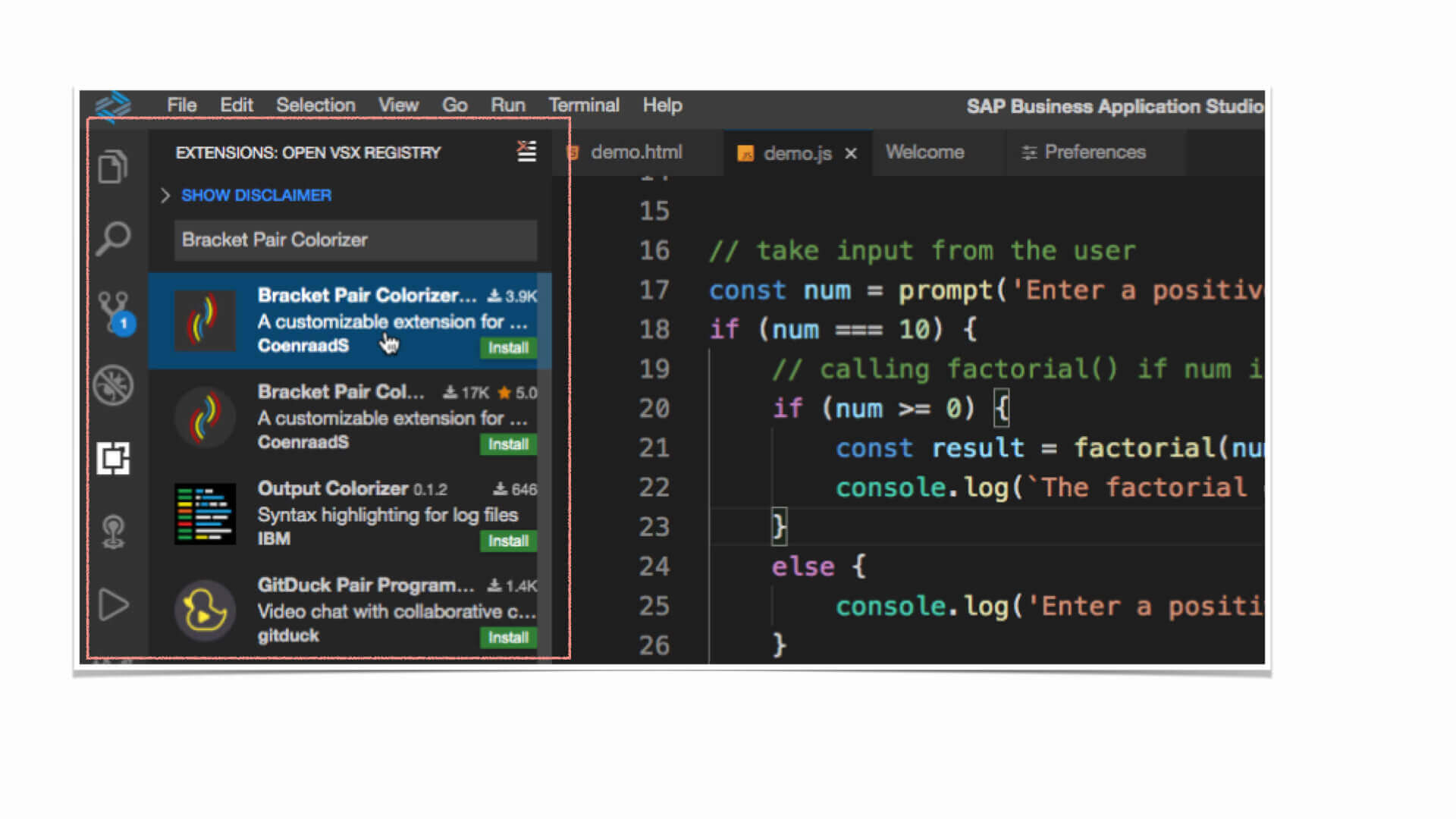
VS Code Plugins can be also used with BAS and VS Code have a lot of nice Plugins.
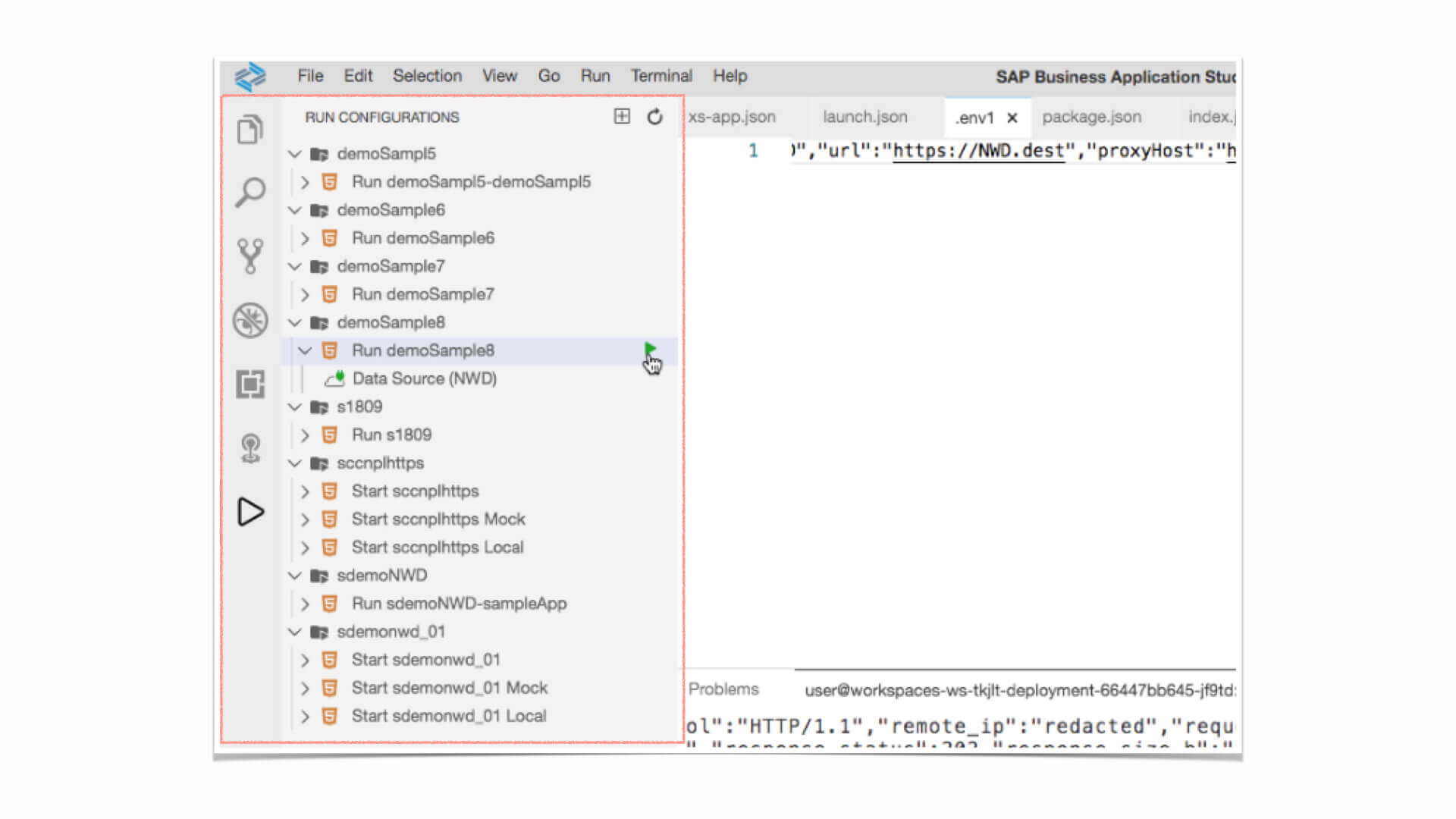
Run Configurations are easy to create and edit as the run configuration or Launch files are a JSON file which one can edit. These launch.json files are also the same when it comes to VS code so prior knowledge of VS Code Development can be used here.
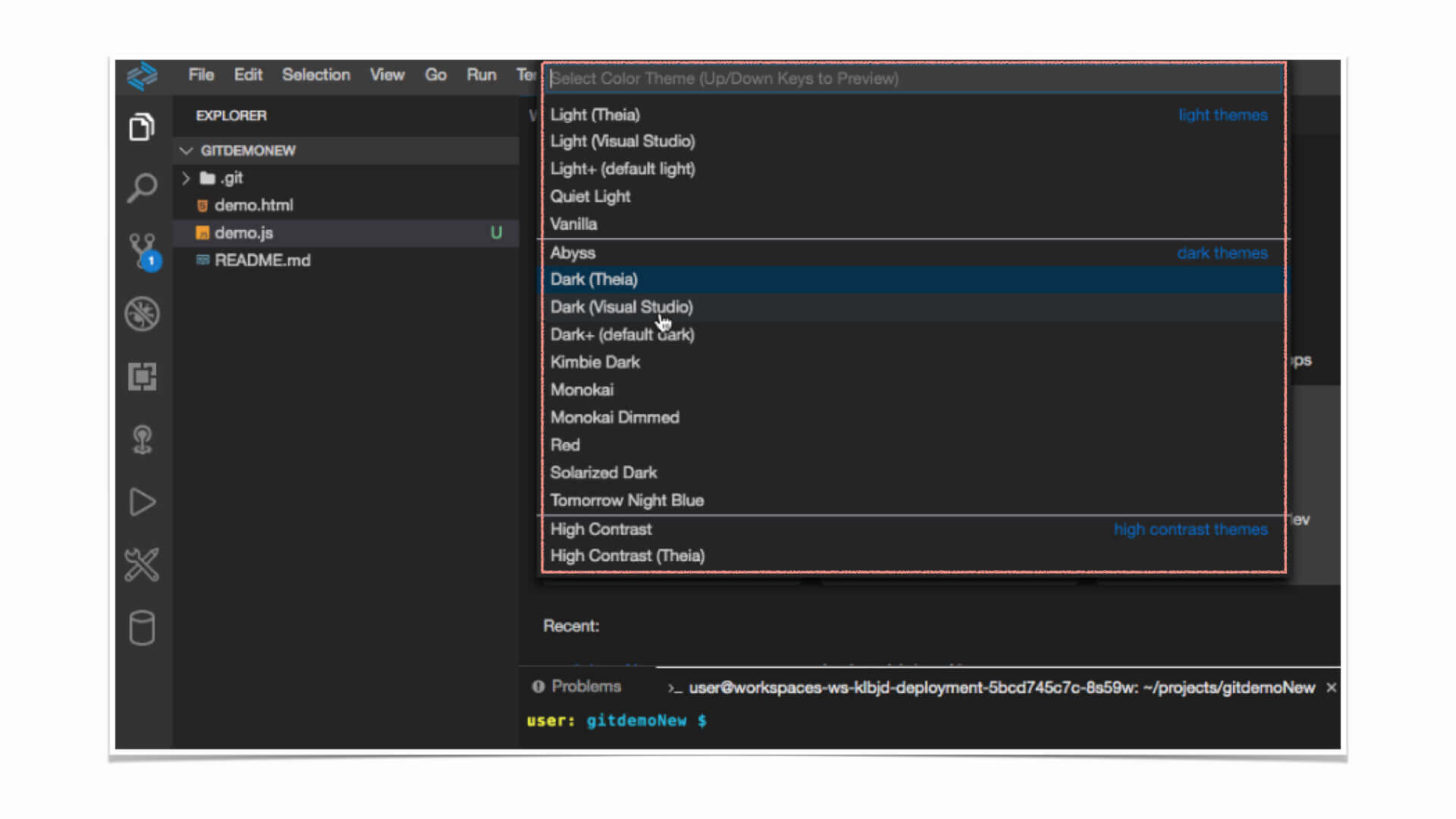
Theme Setting and Visual Setting like Editor’s Fonts, Spaces, etc are easy to change.
You can Add(or Bind) Services like Database, API’s to Test and Experiment Within the BAS environment.
More options are provided to Create Project from Template and also you can use Yeoman Generator from CLI and even Customize the Yeoman Generator to Autofill Fixed Values.
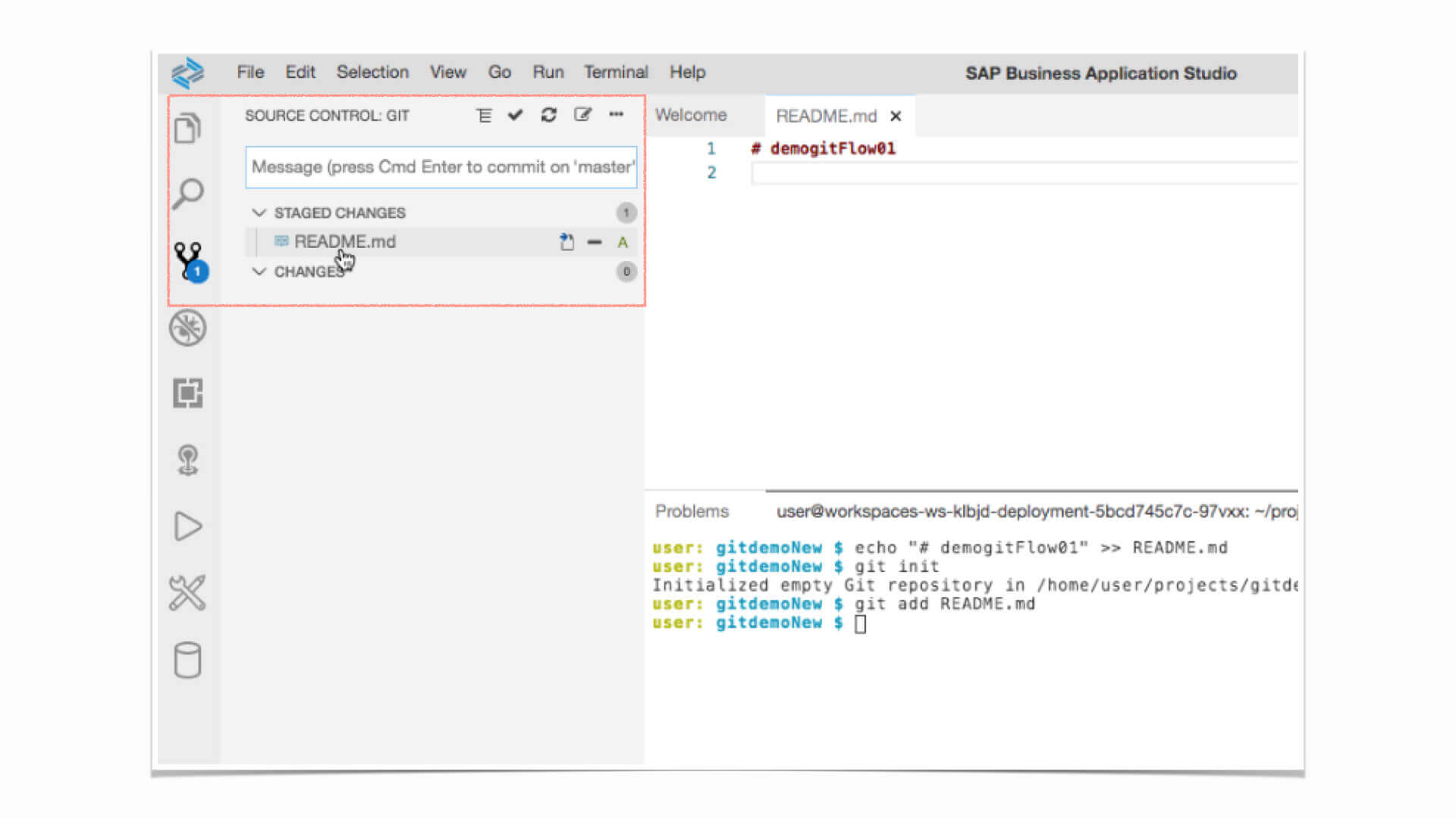
With Independent Git Tab developers can easily Track Changes, Amend Changes, Stage, Push, Pull, etc with Menu Options and the same can be also done with CLI.
Working With SAP® Cloud Foundry(SCF) seems to be more robust. For example: when you deploy your application to SCF and if it stops in between then you can resume or abort it after the failure. Also, the logs can be downloaded of the process and investigation can be done easily within the BAS.
And many new improvements, but these are the top 10.
SAP® BAS Cons Compare to SAP® Web IDE
[Note: Below are personal opinions with our limited experience with Free Trial]
When the BAS is kept inactive for a while it stops automatically and sometimes starting a stopped BAS takes a long time.
When you are working with a slow network, the BAS goes offline and the screen freezes, a good feature is the bottom colored bar shows you that you are offline.
With BAS a limited Amount of Space is provided to you, so when you are out of space, BAS will not allow you to create new folders, files, or installations. You can fix this by removing some files or folders.
8. How Can someone Add Local Run Configuration and Debug code in BAS?
Run Configuration is used to select the configuration and commands to test your code locally. When you add a new Run Configuration in BAS, it automatically suggests to you what are the files and configuration which can be used. When you select a suggested Run Configuration from the selected list a launch.json file is created and when you already have launch.json file then a new entry in the launch.json file is added.
This launch.json file has all the information of what commands need to be run, additional parameters, and multiple other information. You can edit the launch.json manually as well to customize.
When you want to debug, a breakpoint within the code can be easily set by clicking before the line number of the code. When the control passes the code where you have a breakpoint it stops execution and you also can see all the active variables and call stack, which is similar to other Eclipse Debugging Perspective.
In our course of Learn SAP® Business Application Studio(BAS) Development here, we have not only covered how you can add Run Configuration but also how to change the entry of launch.json files for customizing run.
9. How is SAPUI5/Fiori® App Development Changed in BAS Compared to SAP® Web IDE?
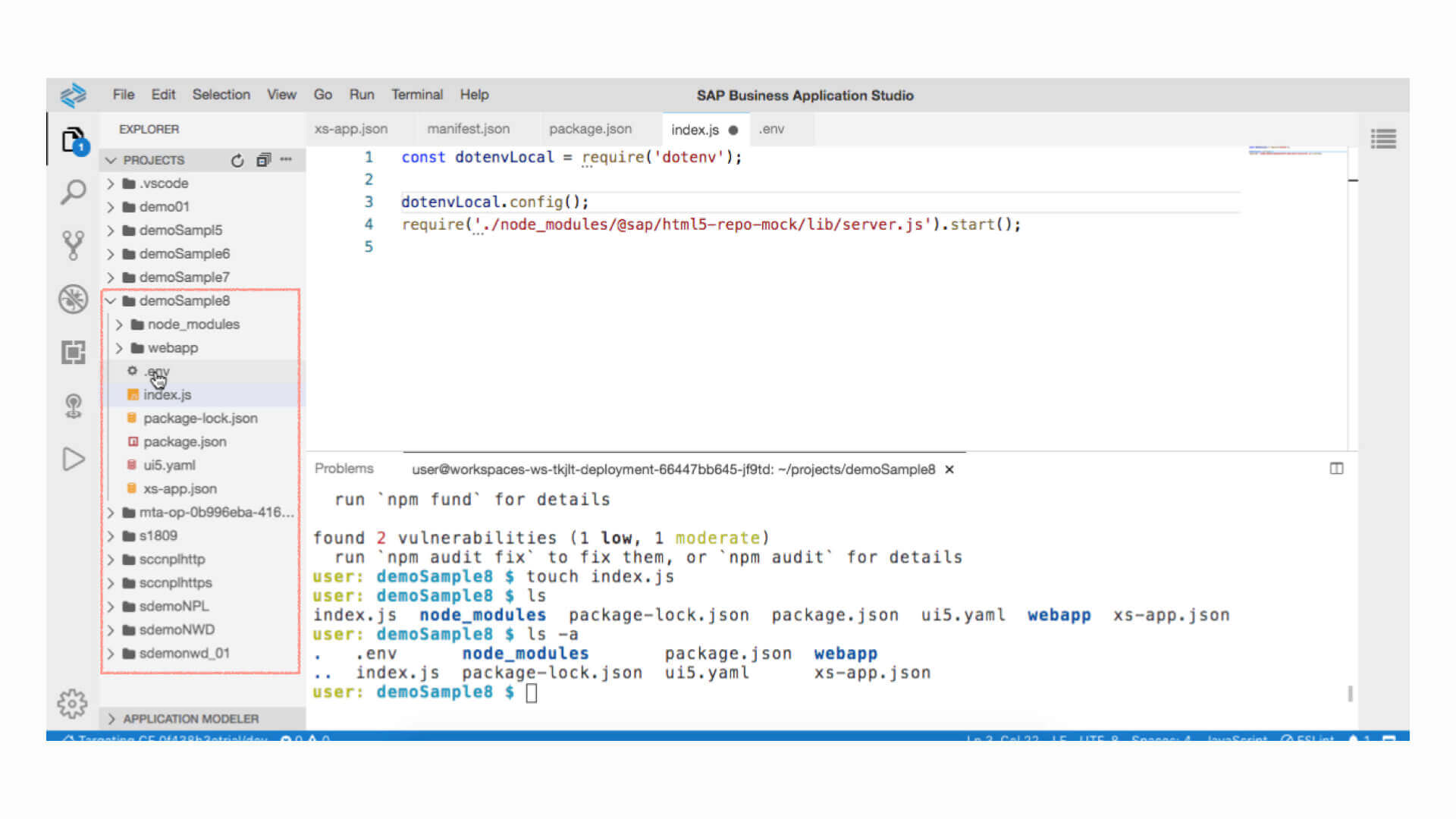
Now with the new pattern, a SAPUI5 App is a NodeJS App where the main SAPUI5 App goes inside a webapp folder and when you are creating an App targeting Cloud Environment then this webapp folder is inside the HTML5Module folder.
When you work with NodeJS based SAPUI5 App, you can use the Terminal for installation of dependencies inside node_modules, adding packages, adding and testing scripts inside package.json, etc. Also, the Terminal can be used to run many small experiments in between development to test the Code. You can also use the Run Configuration to Test the code locally which also abstracts many internal complexities required to run a code(or project) to developers, so developers can skip those if they do not want to be bothered with it. It provides quick debugging and test of the Application possible, which in turn speeds up the development process.
Also, when you are new to NodeJS App development, the concepts of package.json, node_modules and dependencies are totally new concepts. So in our course of Learn SAP® Business Application Studio(BAS) Development here, we have covered the basics in details before using the concepts in SAPUI5 App.
10. How is Workflow App Development Changed in BAS Compared to SAP® Web IDE?
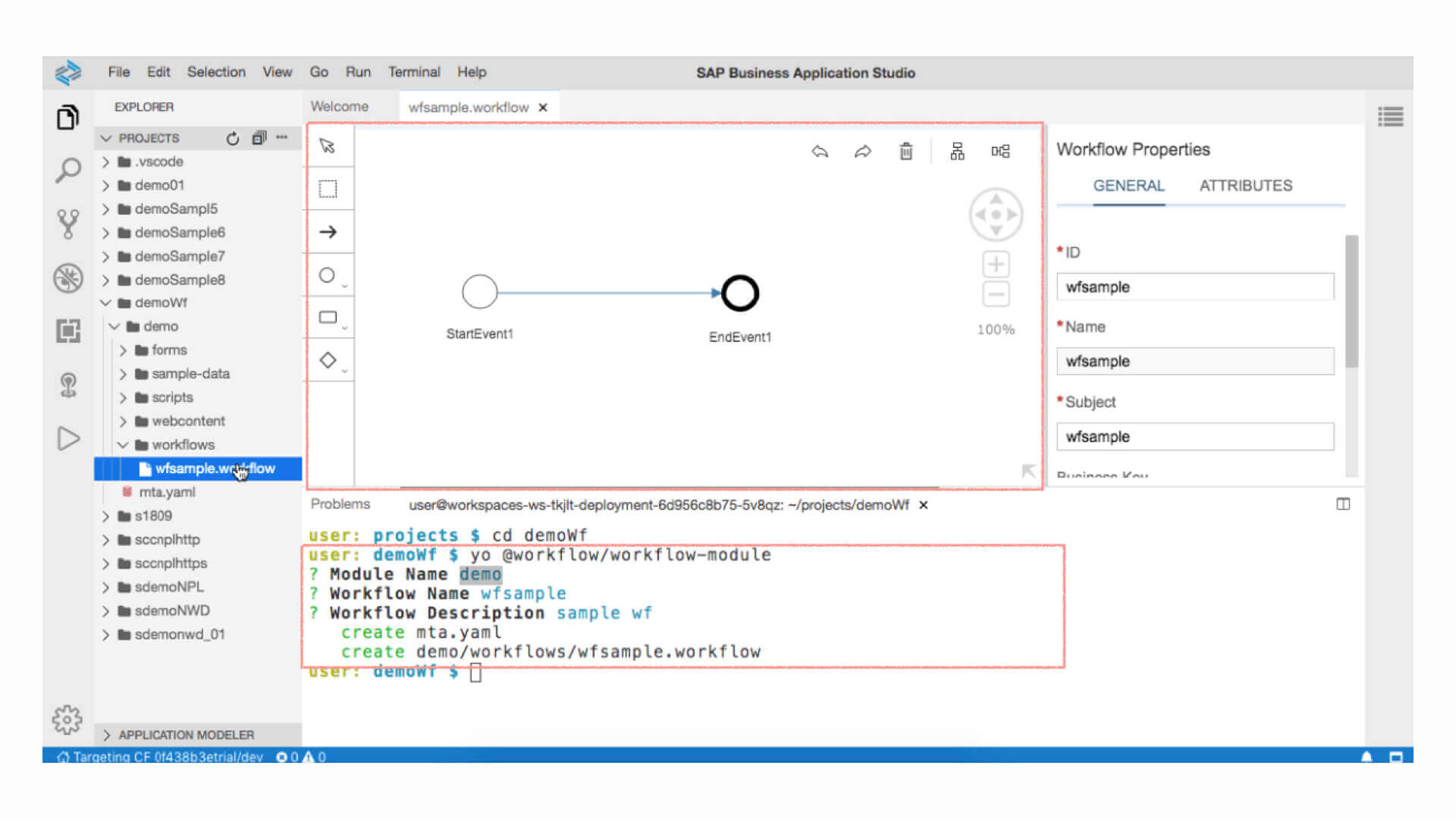
Most of the SAP® Cloud Platform(SCP) Workflow based development is the same as it was with SAP® Full Stack Web IDE. Developers will find new changes when they work with SAPUI5 App and SCP Workflow together. The new changes will be the use of the XSUAA Token passing process for Authentication and Authorization.
You can also see the details of those in our course of BAS here, in Section 5.
11. How is CAPM App Development Changed in BAS Compared to VS Code?
SAP® BAS provides many nice features out of the box for CAPM based development. The New Project from Templates creates all the files which are required for a CAPM App with empty values that the developer can provide according to the project.
The CAPM NodeJS based application again because it is a Node App allows developers to use the powerful CLI experience within the development. The debugging can also be done easily and active variables can be investigated with different tabs provided in debugging panel.
BAS also provides a different tab to add Database Source which allows the developer to see the Database(Local or Remote) content and changes to it, which speeds up the development.
You can also see the details of CAPM App Creation, Running and Deploy in our course of BAS here, in Section 6.
12. How Difficult is it to Personalise Theme Setting in BAS?
SAP® BAS provides Dark Theme which many developers would appreciate. The change of Theme is immediate when you select the new Theme from Theme Setting, which allows you to select the theme based on your liking.
Similarly, the BAS UI Settings can be changed and Personalized easily with immediate feedback.
13. Can we use VS Code Plugin With BAS?
Yes once you accept SAP® Policies for 3rd Party Plugins(Initial Asked in Plugin Tab), it allows you to install additional Plugins from VS Code Library. Installation and Uninstallation both are fast and can be managed from Plugin tabs.
14. Does BAS have an integrated Version Control System like Git?
Yes, BAS provides an independent tab to allow developers to keep track of code changes. You can connect with your respective Git Repository and use standard features like Stage, Ammed, Push, Pull, etc within the same Tab.
One can also use CLI to run Git commands for carrying out the same operations and the respective changes in the Git tab are almost immediate. For example, if you have some changes in the Git tab and you went to Terminal and ran the git add <fileName> command then the respective changes also will appear in the stage section almost immediately in the Git tab.
You can also see the details of the use of Version Control System like GitHub in our course of BAS here, in Section 6.